At the Conclusion of Its Proceedings, Held Under the Patronage of His Majesty King Mohammed VI:
The Euromed University Conference Issues the “Fez Message” on Human Civilization and Artificial Intelligence
“Fez Message”:
* Artificial intelligence represents a major opportunity to advance human progress, provided that universal values are upheld.
* Challenges related to algorithmic bias require the establishment of international regulatory frameworks.
* Artificial intelligence constitutes a strategic lever in international relations.
* Risks related to cybersecurity, disinformation, and hate speech call for effective mechanisms for monitoring, early warning, and response.
* The need to direct artificial intelligence toward serving peace, sustainable development, and fostering intercultural rapprochement.
Fez:
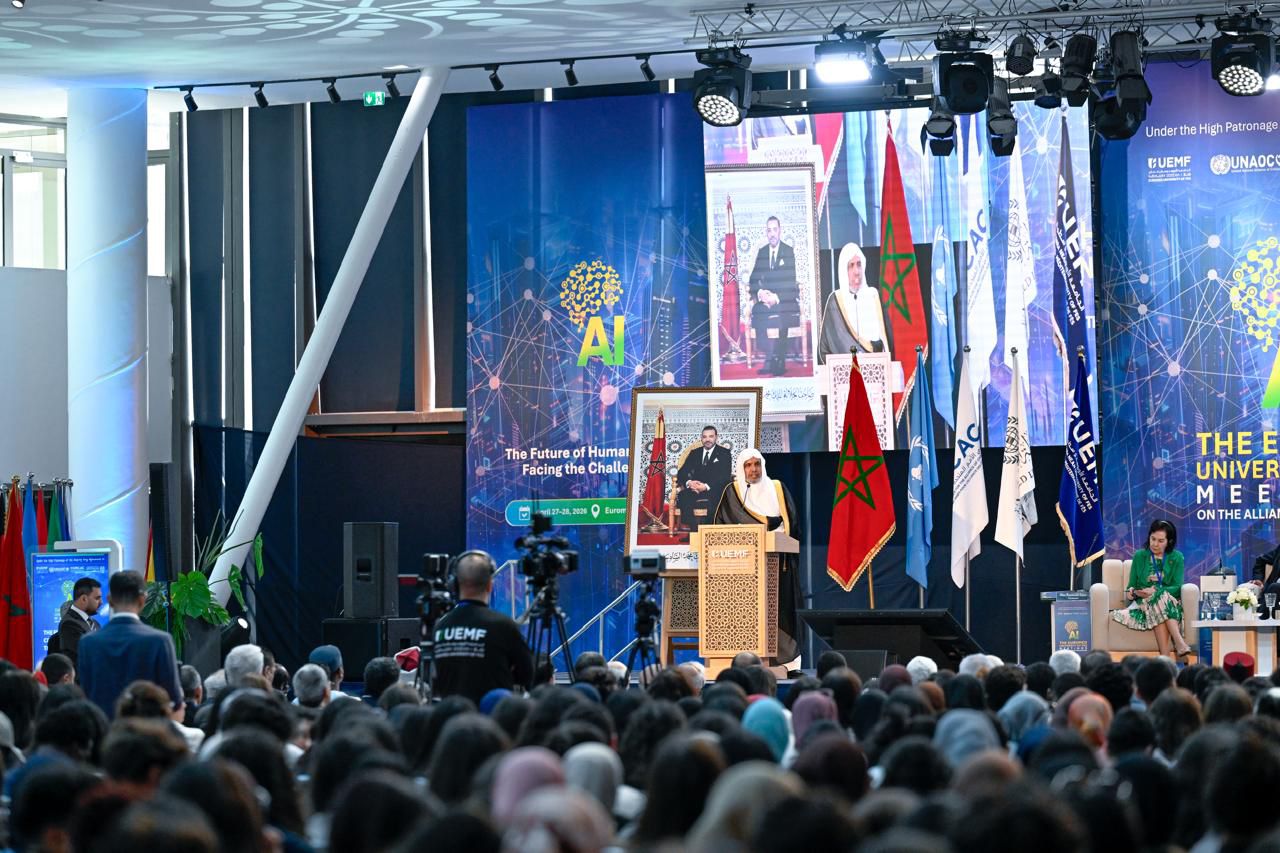
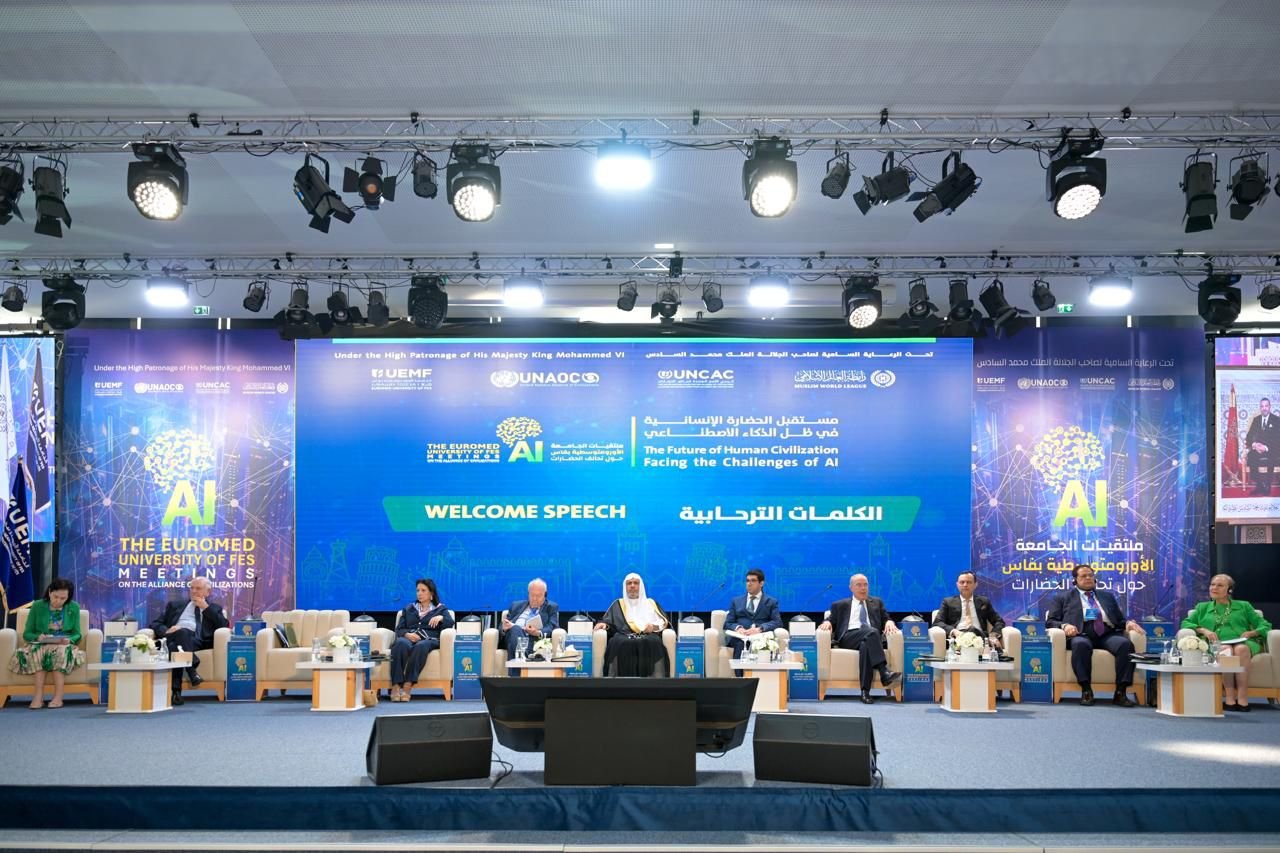
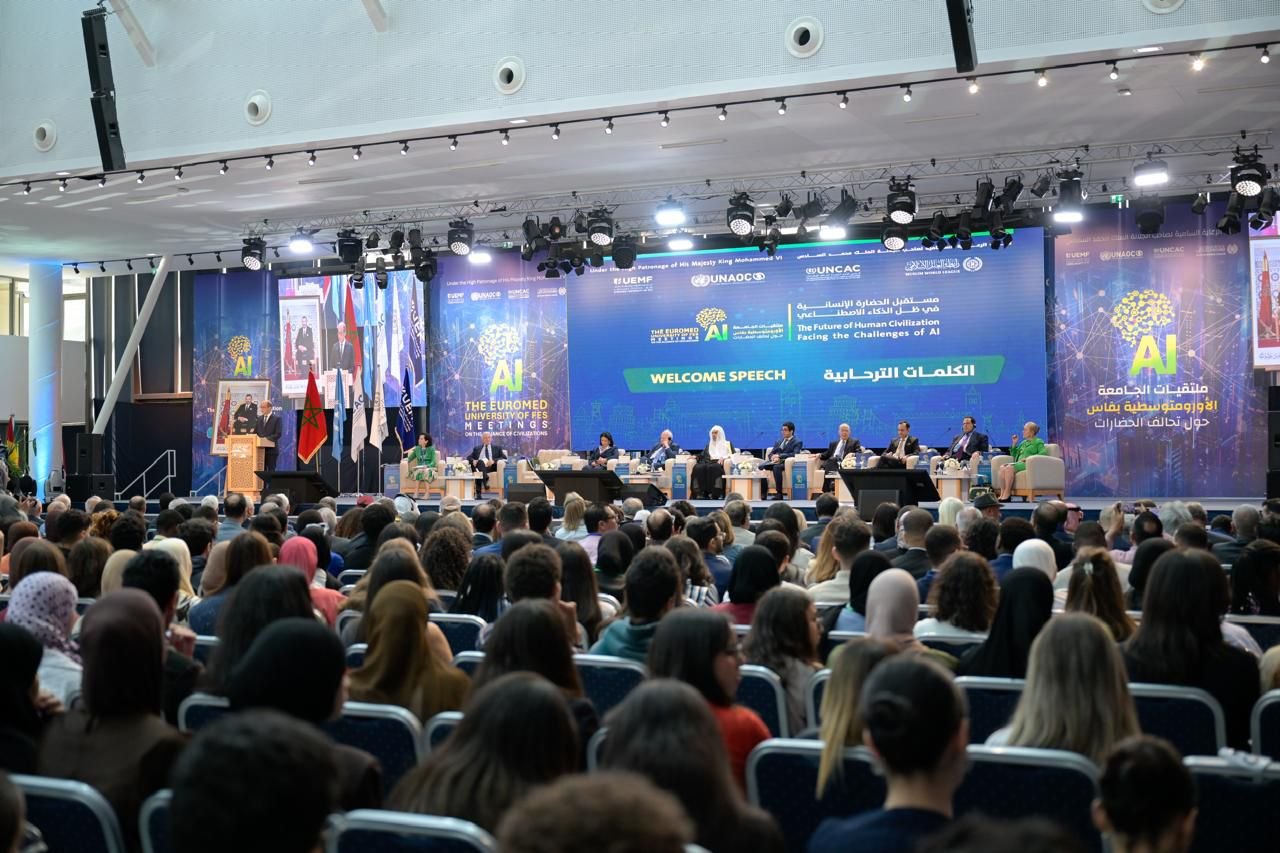
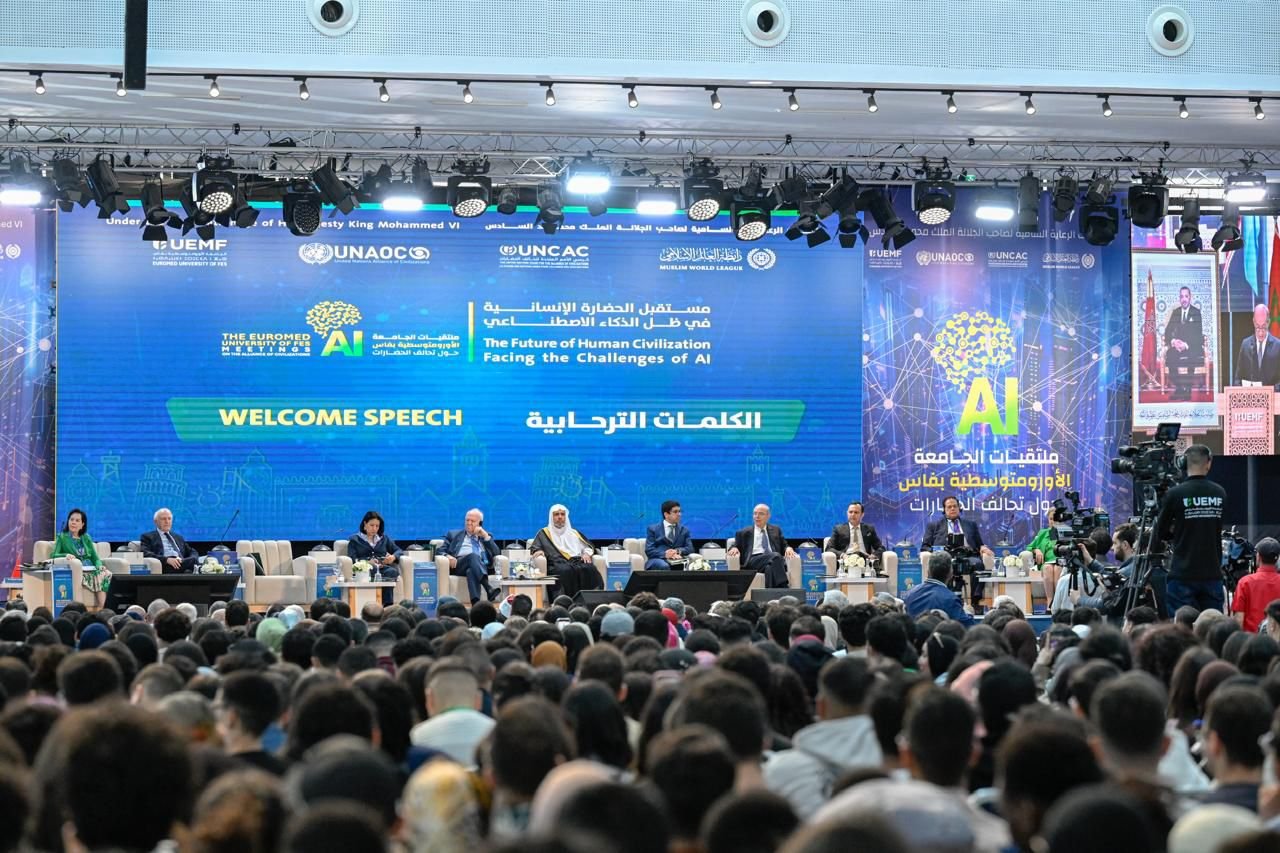
The international conference titled “The Future of Human Civilization Facing the Challenges of AI,” hosted by the Euromed University of Fes, Kingdom of Morocco, under the patronage of His Majesty King Mohammed VI, issued, at the conclusion of its proceedings the “Fez Message on Human Civilization and Artificial Intelligence.”
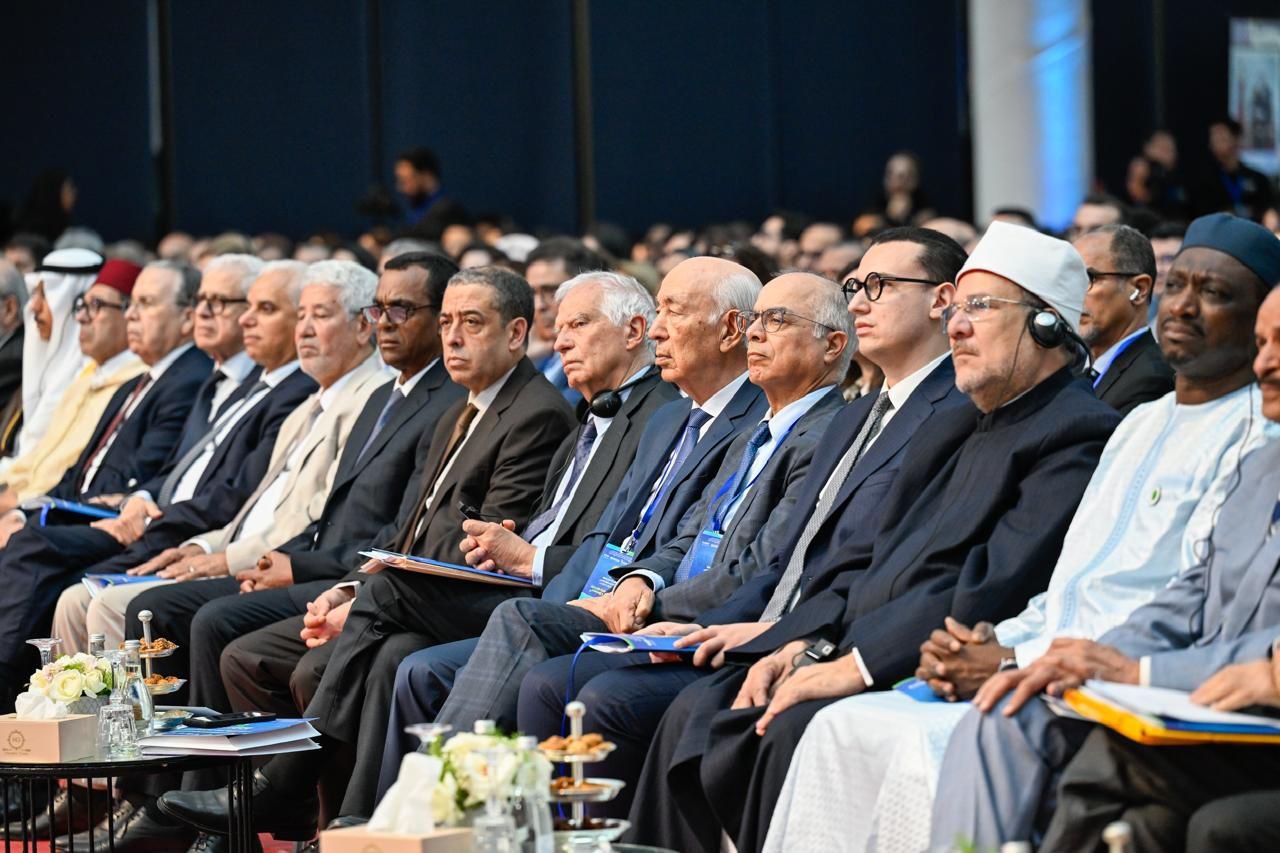
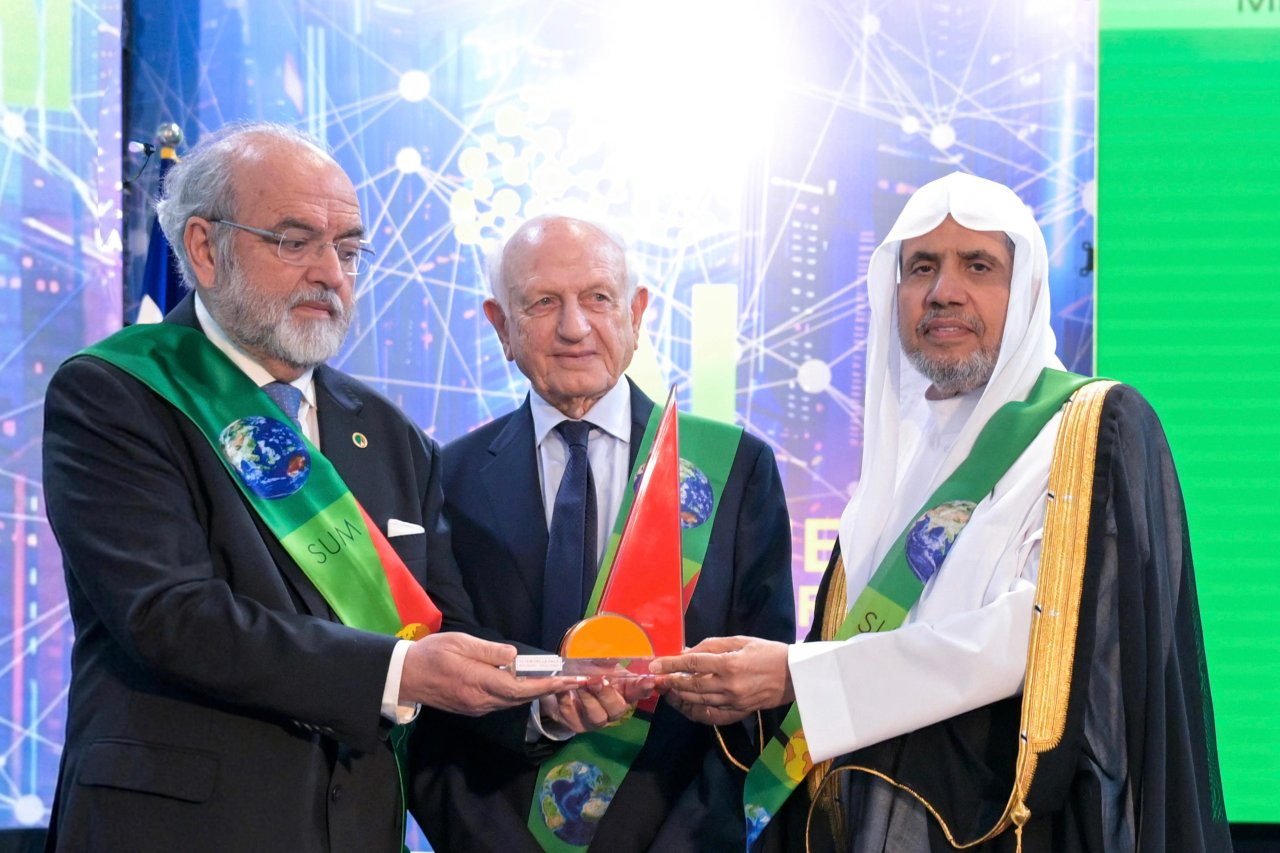
The conference was attended by His Excellency Sheikh Dr. Mohammed bin Abdulkarim Al-Issa, Secretary-General of the Muslim World League and Chairman of the Organization of Muslim Scholars, who participated as a keynote speaker at the opening session, alongside prominent international figures, the High Representative for the United Nations Alliance of Civilizations, and an elite group of academics and intellectuals from 75 countries, with attendance exceeding 2,000 participants.
In the conference’s final statement, participants affirmed that artificial intelligence represents a significant opportunity to advance human progress, provided that its development takes place within a framework that respects universal values, human dignity, and the principles of fairness.
They stressed that the governance of artificial intelligence must be grounded in the principles of transparency, responsibility, accountability, and explainability, in a manner that strengthens trust in intelligent systems.
They further noted that challenges related to algorithmic bias and data quality necessitate the establishment of appropriate and adaptive international regulatory frameworks. They also highlighted that applications of artificial intelligence in healthcare and other sectors open promising prospects, while underscoring the importance of data protection and ensuring scientific reliability.
Participants emphasized that building trust in artificial intelligence systems requires the development of mechanisms for evaluation, auditing, and oversight, alongside better integration of the human dimension.
They underscored that artificial intelligence constitutes a strategic lever in international relations, calling for strengthened multilateral cooperation to prevent imbalances and technological fragmentation and to avoid its domination by certain actors at the expense of others.
They also affirmed that risks associated with cybersecurity, disinformation, and hate speech require the development of effective mechanisms for monitoring, early warning, and response, while encouraging the advancement of AI models that take into account cultural and linguistic specificities, thereby enhancing digital sovereignty and ensuring equitable access to this technology.
Participants highlighted that investing in youth, human capital, and infrastructure represents a fundamental pillar for building a responsible and inclusive digital future.
They concluded by emphasizing the importance of directing artificial intelligence toward serving peace, sustainable development, and fostering rapprochement among cultures and civilizations.
The conference featured four plenary sessions. The first addressed “Questions of Transparency, Responsibility, and Trust: Foundations for Global Governance in the Age of Artificial Intelligence.” The second focused on “Applications and Ethics of Artificial Intelligence in Healthcare.” The third explored “Artificial Intelligence as an Opportunity to Revitalize Shared Human Values.” The fourth discussed “Scenarios for the Future of Civilization in the Age of Artificial Intelligence.”
In addition, five parallel sessions were held, covering the following themes: “Coexistence in the Age of Artificial Intelligence,” “AI Governance and Its Impact on Development Building,” “Ethics of Artificial Intelligence: From Principles to Civilizational Practices,” “Artificial Intelligence and the Technological Revolution: Cybersecurity, Healthcare, and Smart Cities in the Postmodern Era,” and “Artificial Intelligence and Autonomous Systems: Robots and Smart Infrastructure for Future Cities.”
The conference also included lectures and meetings that collectively constituted an international platform for dialogue and strategic reflection on the profound transformations driven by artificial intelligence.